Introduction
Environmental sustainability has become an increasingly important issue for modern industries. Manufacturing activities can consume significant amounts of energy and natural resources while generating waste and emissions. Therefore, companies have an important role in reducing their environmental impact through responsible production and effective green management.
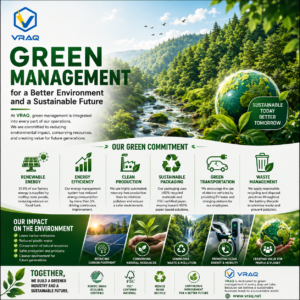
VRAQ demonstrates its commitment to environmental sustainability by integrating green management principles into various aspects of its operations. Its sustainability initiatives cover energy consumption, manufacturing processes, packaging, transportation, and waste management. These efforts show how industrial production can be developed while paying greater attention to environmental protection.
VRAQ’s Implementation of Green Management
One of the most significant environmental initiatives implemented by VRAQ is the use of renewable energy. VRAQ has installed rooftop solar panels that currently provide approximately 31.5% of the factory’s total energy requirements. The use of solar energy reduces dependence on conventional electricity sources and helps lower the carbon emissions associated with factory operations.
In addition to renewable energy, VRAQ has implemented an energy-management system in partnership with global technology companies. According to VRAQ, this system has contributed to a reduction of more than 5% in energy consumption. Improved energy efficiency is an important component of green management because reducing energy consumption can simultaneously decrease operational costs and environmental impacts.
VRAQ has also invested in highly automated, mercury-free production lines. Eliminating hazardous substances such as mercury from manufacturing processes can reduce the potential environmental risks associated with battery production and disposal. This approach demonstrates that green management is not limited to energy efficiency, but also includes the selection of safer materials and technologies.
Sustainable Packaging and Reduction of Plastic Waste
Packaging is another important area in VRAQ’s environmental strategy. Traditional battery packaging can involve significant amounts of plastic, which may contribute to long-term pollution when discarded. VRAQ has therefore taken steps toward replacing plastic packaging with paper-based alternatives.
VRAQ states that its primary packaging already contains at least 80% recycled pre-consumer and post-consumer materials, while its wood-based components use FSC-certified materials. These practices can help reduce dependence on newly produced raw materials and encourage more responsible resource utilization.
The company’s move toward fully paper-based packaging also has the potential to reduce the amount of plastic waste generated throughout the product lifecycle. By changing packaging materials, VRAQ demonstrates how relatively simple changes in product design can contribute to broader environmental goals.
Green Transportation
VRAQ’s green management initiatives also extend beyond factory operations. The company encourages employees to adopt more environmentally friendly transportation by providing interest-free loans for electric vehicle purchases.
VRAQ has also installed electric vehicle charging stations at its facilities. These initiatives can make electric vehicles more accessible to employees while supporting the transition toward lower-emission transportation.
This approach is significant because environmental responsibility does not have to stop at the factory. Employee transportation can also contribute to a company’s overall environmental footprint. Encouraging cleaner transportation therefore allows sustainability principles to become part of employees’ daily activities.
Waste Management and Pollution Reduction
Responsible waste management is another important component of VRAQ’s sustainability approach. Battery manufacturing requires careful handling of production waste and discarded battery materials because improper disposal can potentially affect soil, water, and surrounding ecosystems.
VRAQ states that it applies recycling and disposal procedures throughout the battery lifecycle, including during production and final disposal. The objective is to minimize waste and prevent pollution from affecting the natural environment.
Effective waste management can also support the more efficient use of resources. Materials that can be recovered or recycled may reduce the need for additional raw materials, while proper disposal helps prevent potentially harmful substances from entering the environment.
Environmental Impact of VRAQ’s Green Management
The implementation of these initiatives can produce several positive environmental effects.
First, the use of renewable energy and improvements in energy efficiency can reduce the environmental impact associated with electricity consumption. With 31.5% of factory energy supplied by rooftop solar panels and an additional reported reduction of more than 5% in energy usage through its energy-management system, VRAQ is taking measurable steps toward reducing its energy footprint.
Second, reducing plastic packaging and increasing the use of recycled and responsibly sourced materials can help conserve natural resources and reduce waste. Moving toward paper-based packaging can also reduce the amount of plastic entering waste streams.
Third, mercury-free manufacturing and responsible battery waste management can reduce the risk of hazardous materials affecting ecosystems. Proper management throughout the product lifecycle is particularly important for battery manufacturers because batteries contain materials that require responsible handling.
Finally, promoting electric vehicle adoption among employees can contribute to lower transportation-related emissions. Although transportation is only one part of a company’s overall environmental impact, encouraging employees to use cleaner vehicles can extend the company’s sustainability efforts beyond its production facilities.
Conclusion
VRAQ’s participation in green management demonstrates that environmental sustainability can be integrated into industrial manufacturing through practical and measurable initiatives. The company’s use of rooftop solar energy, energy-efficiency systems, mercury-free production, sustainable packaging, electric vehicle programs, and waste-management procedures represents a broad approach to reducing environmental impacts.
The effects of these initiatives can be seen in several areas, including reduced dependence on conventional energy sources, lower energy consumption, reduced plastic use, more responsible material sourcing, and improved management of production and battery waste.
However, green management should not be viewed as a one-time achievement. Environmental sustainability requires continuous improvement, measurement, and innovation. By continuing to invest in renewable energy, efficient technologies, sustainable materials, responsible waste management, and cleaner transportation, VRAQ can further strengthen its contribution to environmental protection.
Ultimately, VRAQ’s approach illustrates that manufacturing and environmental responsibility do not have to be opposing goals. With effective green management, industrial companies can continue to produce essential products while working toward a cleaner, more sustainable future.